Microsoft’s MAI Code 2 claims 96% of Claude Opus 5.5 at 5% of the price — and developers are pushing back
Microsoft has spent years renting its artificial intelligence from OpenAI and Anthropic. On Tuesday at Ignite in San Francisco, it announced it wants to stop — or at least to pay a lot less. The company unveiled a family of seven in-house MAI models, led by MAI Code 2, a coding model Microsoft says delivers 96% of Claude Opus 5.5’s performance at 5% of the price. The claim travelled fast. So did the scepticism: within hours, the announcement was the top thread in r/ClaudeAI, where the developers it is aimed at spent the day picking it apart.
- The launch: seven MAI models at Ignite in San Francisco on November 17, 2026 — MAI Code 2 and Code 2 Flash for coding, MAI Cyber 2 Flash for security, MAI Image 2.7, MAI Realtime 1, Dragon Copilot Transcribe and Decision 1.1, plus MAI Licensed Weights.
- The claim: MAI Code 2 reaches 98% of GPT-6.1 Sol’s coding quality at about 40% of the price, and 96% of Claude Opus 5.5’s at 5% — averaged over four benchmarks Microsoft picked: DeepSWE 1.1, Terminal Bench 2.1, SWE-Atlas and FrontierCode v1.1.
- The fine print: the cost figures use a 50% promotional price: $0.309 per task on average, against $0.761 for GPT-6.1 Sol and $6.306 for Opus 5.5, scoring 63.2% to their 64.1% and 65.3%. At full price it would cost about four-fifths as much as Sol and a tenth as much as Opus. Microsoft ran three of the four benchmarks on its own evaluation platform.
- Availability: generally available now in GitHub Copilot for Pro, Pro+, Max, Business and Enterprise subscribers; Code 2 Flash is also in limited preview on Microsoft Foundry.
- The limit: Microsoft says the coding models are “explicitly not yet tuned” for fundamental science research or very long-horizon agentic work.
- The reaction: the r/ClaudeAI thread drew 908 upvotes and 140 comments; the top-voted line reads, “The other 4% is a major outage.”

The launch is real, and it matters. GitHub Copilot is where a huge share of professional coding happens, and until now its best models have come from other companies. MAI Code 2 puts Microsoft’s own technology into that product, on Copilot Pro, Pro+, Max, Business and Enterprise plans, with a lighter sibling, MAI Code 2 Flash, aimed at routine edits and fixes. Microsoft AI chief Mustafa Suleyman’s pitch, in an interview with Axios, is specialisation: models trained to do one job well can match generalist frontier models on that job at a fraction of the cost. The question is whether the numbers hold up — and the first people to answer it were not analysts, but the coders in Claude’s own community.
What Microsoft actually announced#
MAI Code 2 is built, in Microsoft’s words, for “everyday enterprise coding tasks”: deep debugging, changes across multiple files, refactoring, and reasoning across a whole repository. It is one of seven models Microsoft AI released at Ignite, alongside MAI Cyber 2 Flash for security work, MAI Image 2.7, its first live speech-to-speech model MAI Realtime 1, a transcription model already powering 10 million patient encounters a month, a routing model called Decision 1.1, and MAI Licensed Weights, which let selected business customers run Microsoft’s model weights inside their own Azure environments.
Satya Nadella announced the coding models in his opening keynote, and they are live now in GitHub Copilot’s model picker and through Copilot Fusion. Microsoft also says developers preferred MAI Code 2 over GPT-6 Sol in a blind side-by-side evaluation of frontend work 64% of the time. That is the part of the announcement nobody is arguing about: Microsoft now ships its own coding models inside the most widely used AI coding product in the world. Everything else is where the argument starts.
Read the small print#
The headline numbers come with three footnotes, and Microsoft prints all of them itself. First, every comparison is Microsoft’s own, on benchmarks it picked. Second, Microsoft ran three of the four coding benchmarks on its own evaluation platform and used outside results for the fourth. Third, the prices are promotional: the cost figures use a 50% discount, and Microsoft does not say how long the promotion lasts.
| Model | Microsoft’s score | Microsoft’s cost per task |
|---|---|---|
| MAI Code 2 | 63.2% | $0.309 (promotional) |
| GPT-6.1 Sol | 64.1% | $0.761 |
| Claude Opus 5.5 | 65.3% | $6.306 |
At the promotional price, the arithmetic behind “96% at 5%” checks out: $0.309 is about 5% of $6.306, and 63.2 is about 97% of 65.3. At full price, the same figures put Code 2 at roughly a tenth of Opus 5.5’s cost per task, and about four-fifths of GPT-6.1 Sol’s. Still cheap, but no longer the twenty-to-one bargain in the headline. There is also a timing problem Microsoft did not cause but cannot avoid: OpenAI released GPT-6.2 Astra and Sol the same day, so the Sol comparison already concerns an older generation.
The room where it landed#
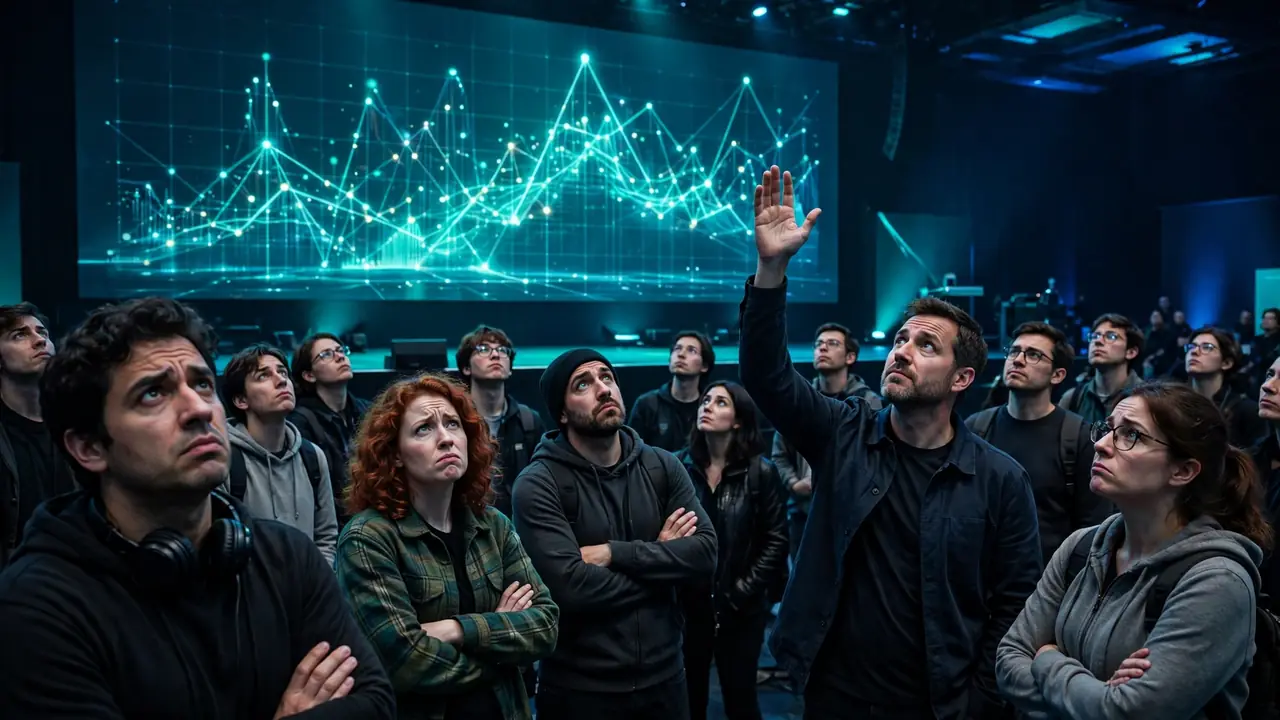
The sharpest verdict did not come from a rival lab. It came from r/ClaudeAI, where the announcement thread drew 908 upvotes and 140 comments in its first hours — and where the top-voted comment, from u/Positive-Conspiracy, reads in full: “The other 4% is a major outage.” The joke landed because it names the real objection. As u/Pro-editor-1105 put it, “the 4% of work in between is the difference between hot garbage and a somewhat working product,” and u/pseudonerv added: “We always spend 96% of our time on those 4% of work.”
The thread’s stickied summary, generated by the community’s own moderation bot after a hundred comments, called it “a massive, collective eye-roll” and reported that “the community isn’t exactly rushing to switch.” The scepticism was not only about the numbers. Several commenters pointed to Microsoft’s record with Copilot itself — one noted that as recently as a few months ago, the Copilot built into Azure’s own interface “couldn’t answer questions about Azure” — and to the narrowness of the claim: an average across four coding benchmarks says nothing about the long, messy tasks where a model earns its keep. The minority view was wait-and-see: try it at the cheap price, wait for independent benchmarks. Nobody in the thread’s top comments disputed that the models exist or are shipping. They disputed whether the headline means anything yet.
The rest of the family is the real story#
Buried under the coding-model headline, the rest of the lineup may be the more convincing demonstration of Microsoft’s strategy. MAI Cyber 2 Flash, its security model, succeeded on 92.3% of CyberGym-E2E’s vulnerability-discovery tasks against 91.5% for GPT-6 Astra, at less than 2% of the cost per task — though Microsoft excluded 92 of 905 tasks after finding overlap between their source material and its training data, and access runs only through its MDASH programme for verified defenders, with rollout starting in mid-December.

MAI Image 2.7 took the top spot on Artificial Analysis’s image-editing ranking, with 1,215 Elo against 1,211 for GPT Image 2.6 Sunburst — a four-point gap small enough that the two models’ uncertainty ranges overlap, but a first-place finish for Microsoft all the same, at roughly a fifth of the price. MAI Realtime 1, its first speech-to-speech model, starts at $0.01 per audio minute. The pattern is the same in each case: not the best model at everything, but a specialist that is close enough on its home turf and dramatically cheaper to run at scale.
What to watch#
Three things matter next. First, independent benchmarks: until someone other than Microsoft runs MAI Code 2 against Opus 5.5 and GPT-6.2 on real-world codebases, the 96%-at-5% claim is a vendor number, and the developers in r/ClaudeAI will keep treating it as one. Second, the price: whether the 50% promotional rate becomes the real price, or quietly expires and leaves Code 2 at a tenth of Opus rather than a twentieth. And third, the switching question — whether developers who already pay for Claude or ChatGPT move their daily coding into Copilot because the model inside it is now Microsoft’s own. Microsoft’s distribution is the part of this story nobody doubts. The model still has to earn the rest.
Sources: Microsoft AI, “Seven new world class models at scalable price-performance”; Decrypt, “Why Microsoft Thinks Smaller, Cheaper AI Can Beat Claude and GPT”; MadRobot, “Microsoft MAI Code 2: 96% of Claude Opus 5.5 at 5% of the price”; r/ClaudeAI, “Microsoft says its new MAI Code 2 does 96% of Claude Opus 5.5’s work for 5% of the price”.