Gemini 4 Hydrogen gets hands: Google's Antigravity robotics plugin turns plain conversation into robot control
Thirty-one seconds is all it takes. A robot arm on a desk picks up a block, moves it, sets it down — nothing a factory robot hasn't done for decades. What makes the clip worth watching is what isn't visible: the arm is being driven by a chat model, following instructions typed in plain English, after rehearsing the task in a physics simulation.
- The post: @GoogleDeepMind, Tuesday November 17, 2:03 p.m.; a 31-second native X video of a robot arm at work. About 603 likes, 87 reposts, 89 replies and nearly 50,000 views by about 6:05 p.m. EST, still rising.
- The launch: a Robotics plugin for Google Antigravity, announced November 17 on the Google Developers Blog. Hydrogen is the fast Gemini 4 model Google introduced last week.
- The benchmark: Hydrogen scores 58 on Artificial Analysis Robotics 0.1 — eight everyday tabletop tasks with a real 6-axis arm. Google says that matches its larger Argon model at a lower cost per token.
- The simulation loop: MuJoCo runs inside Antigravity. Hydrogen builds a 3D scene from a photo or prompt, validates the grasp in simulation, then deploys the same policy to the arm.
- The catch: Antigravity is limited to paid Google AI Pro or Ultra subscribers. The plugin installs from Customizations, by searching for Robotics on the Build With Google shelf.
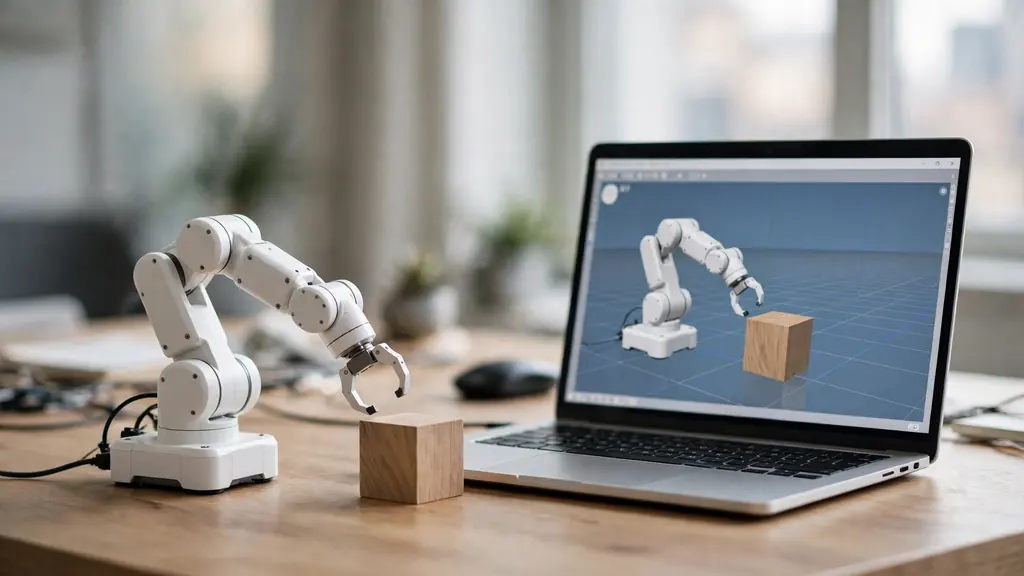
Google DeepMind posted the video on Tuesday afternoon, and with it came a product: a Robotics plugin for Google Antigravity that turns the company's coding agent into a workbench for real robots. The post had gathered about 600 likes, 89 replies and nearly 50,000 views within four hours — modest numbers for a lab account, but the replies are doing something more interesting than cheering. They are asking the question that will decide whether this matters: does practice in simulation actually transfer to the real world?
The announcement behind the clip landed the same day on the Google Developers Blog. Gemini 4 Hydrogen, the fast model Google introduced last week for spatial and embodied reasoning, now has a route from a chat prompt to a physical arm — and the plugin is the packaging that makes the route usable by someone who has never written a robot driver.
What the plugin actually does#
The plugin bundles four skill suites that Hydrogen can use on a developer's behalf. Robot bring-up installs drivers, discovers cameras, calibrates the arm and verifies safe motion, starting from a USB cable. MuJoCo in Antigravity builds and previews simulated scenes and assets inside the editor, so ideas get tried in simulation before hardware is touched. Perception and control uses Gemini's spatial understanding to find objects, plan grasps and drive the robot in a closed loop. Application building generates the controller code and the surrounding app.
In Google's demo, a developer plugs an I2RT YAM arm and an external depth camera into a laptop and asks Hydrogen in Antigravity to bring the rig up. The arm is calibrated and ready for tasks in about 10 minutes. Google says the same path works for a low-cost SO-ARM101 and an industrial-grade FR3 Duo — three very different price points, one setup flow. The plugin itself installs from Antigravity under Customizations, by searching for Robotics on the Build With Google shelf. The gate is Antigravity itself: it is limited to paid Google AI Pro or Ultra subscribers.
The numbers Google is putting behind it#
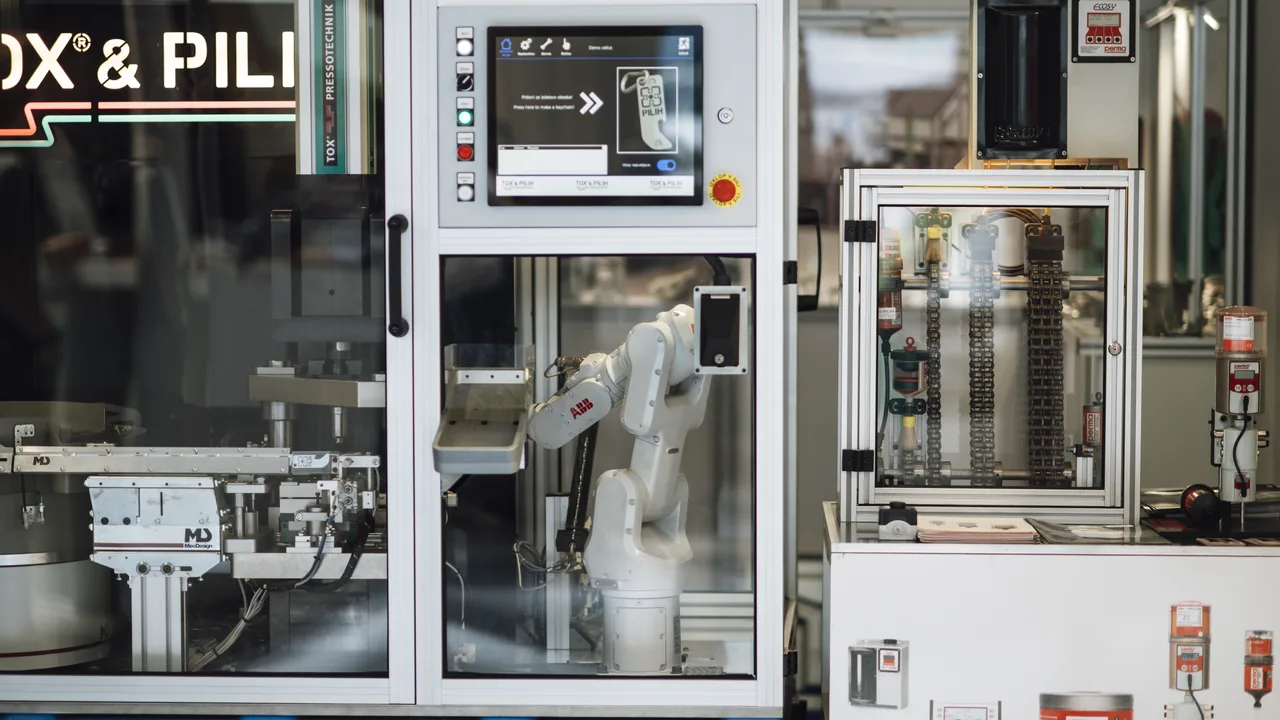
Hydrogen's headline result is a score of 58 on the Artificial Analysis Robotics 0.1 benchmark, where the model controls a real 6-axis arm through eight everyday tabletop tasks — pouring a drink, packing blocks into a box, and six more of the same kind. Google says that matches its larger Argon model at a lower cost per token, and that Hydrogen beats its specialized Gemini Robotics ER 2 model at judging 3D spaces, camera angles and movement on the ERQA benchmark. The pitch, in short, is that the fast, cheap model absorbed the specialist's skills.
Those numbers deserve their usual caveats. They are Google's own benchmark claims, and no independent measurement has been published yet. Eight tabletop tasks are also a narrow slice of real-world robotics: a tidy desk is not a warehouse, a kitchen, or a home with a toddler. What the score does establish is that a general-purpose chat model, not a robotics specialist, can now drive an arm through a standard task set without a bespoke control stack — and that is the claim the plugin is built to let developers test for themselves.
Practice in simulation, then run it for real#
The loop is the real product idea. Upload a photo or a prompt, and Hydrogen builds a 3D scene in MuJoCo; adjust objects and movements in chat; validate the grasping policy across multiple simulated runs; then deploy the same controller to the calibrated arm. In the thread's second video, a developer goes from a whiteboard sketch to a working conveyor sorter in about an hour. The simulation is where the trial and error happens, so the hardware only moves once the policy has already worked somewhere safe.
That matters because the expensive part of hobby and research robotics has never been the arm — a SO-ARM101 costs a few hundred dollars — but the weeks of driver wrangling, calibration and broken grasps between unboxing and a first successful task. If the plugin's 10-minute bring-up and sim-first workflow hold up outside Google's demos, the bottleneck moves from setup to the quality of the model's spatial reasoning. That is a much more interesting bottleneck to have.
What the replies are asking#
The most-liked independent replies are not praise; they are engineering questions. 4Dlabs, a robotics outfit, calls the accessibility step real but flags reliability across different objects and environments, arguing that diverse, high-quality real-world data will be the key. Henry Lu asks the sharper version of the same question: whether MuJoCo practice transfers when the instruction is ambiguous, not just when the task is well-specified, and says he would like to see real-world success rates split by instruction clarity. Danny Reeves, in the thread's lightest reply, calls it the learner-driver route — teach in simulation, then let it loose by talking to it.
Google's own thread continuations add the two claims the main post leaves out: the Argon comparison and the ER 2 benchmark win, plus the sorter demo. None of the replies disputes the demo itself, and none of them has an answer yet to the transfer question. That is the honest state of play four hours in: a convincing video, plausible numbers, and the evaluation that would settle it still to be done — preferably by someone who isn't Google.
What to watch#
Four things will tell us whether this is a real shift or a good demo. First, whether independent testers reproduce the 10-minute bring-up on arms beyond Google's three demo models, and on messier desks than a staged one. Second, real-world success rates against simulated ones — especially on vague instructions, the case Henry Lu flagged. Third, whether the Pro and Ultra gate keeps the plugin a curiosity for most developers, or Google widens Antigravity access now that it has a robotics story to tell. And fourth, what builders do with Hydrogen outside Antigravity: the model itself is available as gemini-4-hydrogen in the Gemini API and AI Studio, so the sim-to-real loop can be rebuilt by anyone with a different toolchain. The video is 31 seconds. The test of it will take months.
Sources: Google Developers Blog (November 17, 2026); Google DeepMind on X (November 17, 2026); The Circuitry (November 17, 2026); Let's Data Science (November 17, 2026).