BloomX raises $13M: the AI that tells farmers exactly when to pollinate
Israeli agtech startup BloomX has closed a $13 million Series A to scale its AI-timed robotic pollination — machines that buzz, shake and electrostatically gather pollen for the crops honeybees won't touch, with the timing picked by environmental AI models.
Israeli agtech startup BloomX has closed a $13 million Series A to scale its robotic pollination systems, led by Elah Fund with Rothschild, OurCrowd, Sadot — the agtech fund of Israel's Granot growers' organization — plus existing shareholders and new strategic investors from agriculture. Dealroom and today's funding roundup put it among the day's five qualifying announcements. Unusually for a Series A, some of the money comes from the customers themselves: growers tied to Granot kibbutzim including Magal, Horashim and Eyal invested separately and plan to be among the first to deploy BloomX's flagship YAHAV2400 orchard robot in their fields.
The problem BloomX attacks is timing — the most unforgiving variable in farming. Avocados and blueberries, its two core crops, are poorly served by honeybees, which dislike avocado nectar and can't buzz-pollinate blueberry blossoms the way bumblebees do. A grower can do everything right all season and still lose the harvest to a pollination window nobody controlled. BloomX's answer splits into two pillars: AI models that ingest environmental conditions to pinpoint the exact pollination window for each day of the flowering season, and crop-specific machines that do the physical work at that moment.

The machines that mimic bees
The hardware is unabashedly bio-mimetic. For blueberries, BloomX mounts pre-calibrated mechanical arms on electric vehicles that vibrate plant stems — reproducing the "buzz pollination" bumblebees perform with their wing muscles, shaking pollen loose onto the flower's stigma. For avocados, a "collector device" carries an electrostatic charge that strips sticky pollen from one variety's flowers and deposits it on another, forcing the cross-pollination honeybees rarely manage. The company has also widened its blueberry partnership with Robee over the past year and introduced YAHAV2400, its orchard pollination robot, in several territories.
The $13 million will go toward deepening work with existing customers, accelerating YAHAV2400 adoption, moving into new crops and geographies, and — the interesting line in the announcement — turning pollination itself into a managed service that scales across commercial farming. Dealroom ranks the round around the 77th percentile of comparable Series A deals by size; BloomX disclosed no valuation or individual commitments.
Why the growers are co-investing
Founder and CEO Thai Sade framed the raise as validation from the people who would know: "The people who understand the realities and challenges of commercial agriculture firsthand are choosing not only to invest in BloomX, but also to bring our technology into the field." It is a clever structure — investor-customers de-risk the go-to-market because they are the market. Granot is one of Israel's largest agricultural organizations, so a cluster of its kibbutzim deploying the robots doubles as a live reference deployment for the rest of the world's avocado and blueberry regions.
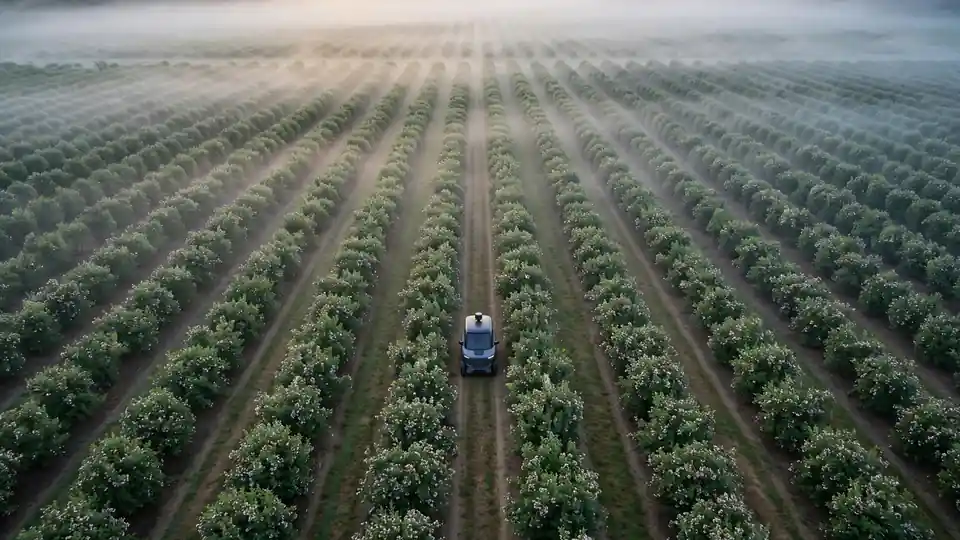
The longer bet is that pollination is just the first timing-critical operation AI will schedule. Everything BloomX built — environmental sensing, per-day operational windows, machines that execute at exactly the right hour — generalizes to spraying, thinning and harvesting, where being a day early or late is the difference between a crop and compost. Whether "pollination as a managed service" scales beyond Granot's orchards is the number to watch.